
Hunt: Playtime with Your Cat’s Favorite Prey
Dawn and dusk are ideal times of day for carnivorous hunters to stalk and catch small mammals and birds, and cats often experience a high energy level during these hours. When cats aren’t able to satisfy their instinctive need to stalk and chase, unwanted behavior may surface, including aggression, nighttime prowling and yowling, relentless craving for attention, excessive grooming, inappropriate urination, and hiding. Addressing a cat’s need to engage in hunting behavior can often help resolve issues like these.
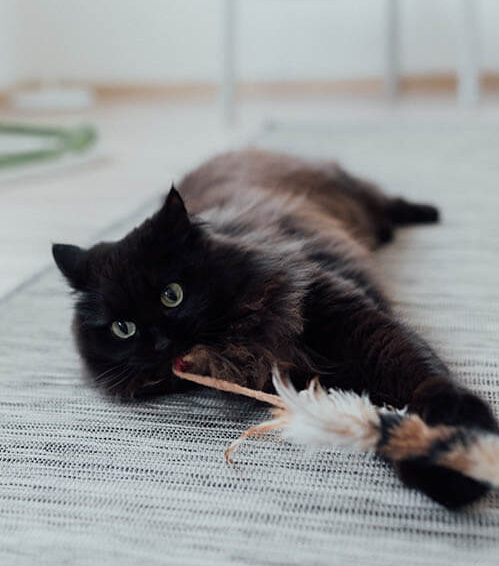
The best way to help your cat express their hunting behavior is to engage them in interactive play using toys and movements that mimic the motion of prey species. While many cats self-initiate play with cat toys, the most effective way to move play activity into hunting activity is to play with your cat in ways that get them stalking, running, pouncing, leaping and catching for at least 10 minutes at time.
Shop Our Selection Of Cat Toys & Filter By Prey Type
Eat: Emphasizing Moisture, High Meat & Variety
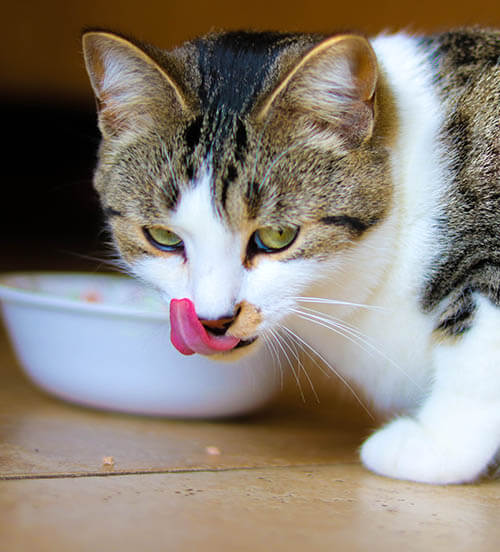
The reward at the end of a wild cat’s hunt is their meal. Because of the small and variable nature of their prey, cats evolved to consume several small meat-based meals throughout the day rather than one or two larger meals. The perfect way to engage a cat’s natural eating cycle is to offer a hunting reward after interactive play, ideally as small bits of food similar in form to natural prey.
A cat hunting for themself wouldn’t eat the same food at every meal, so you may want to consider a rotational diet for your cat. If you introduce a new food formula to your cat during the “eat” part of their daily cycle, they’re more likely to be receptive. High moisture foods, such as wet and frozen raw food, will help keep your cat well hydrated.
Groom: Social Bonding with Your Cat
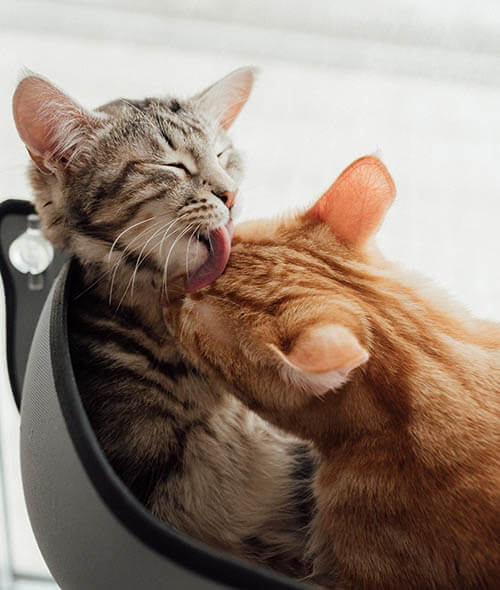
The grooming time in your cat’s daily cycle is a great time to strengthen your bond through cuddling and petting. Cats also perceive grooming as a social behavior, so gently brushing your cat is often appreciated.
To build a grooming routine with your cat, start slow. Gentle pets near your cat’s face, where they can see your hands are often appreciated. Make sure your cat is alright with your hands before adding a brush to your grooming routine. Avoid touching the belly initially, which can make your cat feel more vulnerable.
Brushing your cat after eating also helps increase skin and coat health by stimulating oil glands in the skin to produce and spread healthy oils. These oils create a barrier to bacteria, fungus, and pests like fleas. Brushing also removes loose hair that might otherwise be ingested (reducing the likelihood of hairball vomiting) and helps prevent hair from shedding into the home environment.
Sleep: Planning the Perfect Catnap
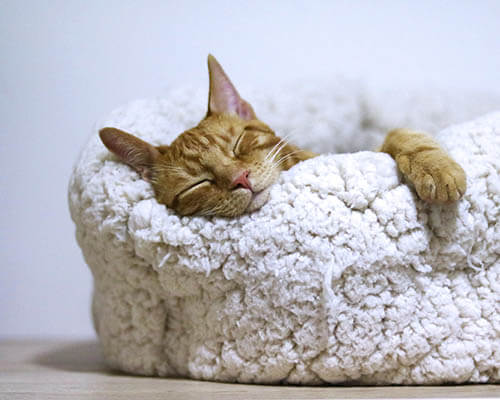
Most cats seem able to sleep anywhere, but cats are actually very territorial and prefer to sleep where they feel the most secure. Their choice napping spots are where your cat is most comfortable during their sleep cycle. You should expect your cat to spend 12 to 18 hours each day sleeping in one- to two-hour blocks of time.
Do you have a height fancier that likes to seek out the highest spot in the house for their slumber? You may want to consider buying or building them a cat tree.
In addition to providing a secure space for height-preferring cats, cat trees can include scratching surfaces and a variety of platforms for napping or surveying the floor below.
Repeat: Integrating Your Cat’s Natural Preferences into Your Lifestyle
After your cat wakes from their latest nap, the entire activity cycle begins again. While the daily cycle of hunting, eating, grooming and sleeping is hard-wired into your cat, it can be managed so the timing works with your schedule, reducing stress and anxiety for everyone.
Don’t be afraid to experiment with what might appeal most to your household’s needs. Many cat owners try to incorporate playtime and snack right before bed, so their cats are ready to take a nap when they are. Adults who work outside the home can also sneak in several meals by feeding at least once in the morning, once immediately after work, and then a final snack before bed. A puzzle toy with a few small pieces of food can keep these cats active during the day, too.
Shop All Cat Products In Our Online Store & Get Free 2-Day Local Delivery (with purchases over $35)