
  • Home
  • Healthy Cats
    • Cat Food
    • Cat Litter & Boxes
    • Cat Toys
    • Cat Treats
    • Supplements
    • Supplies
    • Cat Brands We Carry
    • What’s New at Mud Bay
    • The Best Diet for Your Cat
    • Choosing a Healthy Litter
    • Dental Health for Cats
    • Healthy Weight & Exercise for Healthy Cats
    • Health Problems in Cats
    • Kitten Care: Feeding and Bonding with Your New Kitten
    • The Aging Cat
  • Healthy Dogs
    • Dog Food
    • Dog Toys
    • Treats & Chews
    • Supplements
    • Supplies
    • Dog Brands We Carry
    • What’s New at Mud Bay
    • The Best Diet for Your Dog
    • Dental Health for Dogs
    • Healthy Weight & Exercise for Healthy Dogs
    • Health Problems in Dogs
    • All About Puppies: Caring, Feeding, and Socializing Your New Dog
    • The Aging Dog
  • Our Relationships
    • Manufacturing Partnerships
  • Store Locations
  • Gift Cards
  • Contact Us – Old Smartsheet
  • Careers
  • About Us
  • Mud Bay Events
Mud Bay Logo
  • Return to Online Store
  • Healthy Cats

    About Our Products

    • Cat Food
    • Cat Litter & Boxes
    • Cat Toys
    • Cat Treats
    • Supplements
    • Supplies
    • Brands We Carry
    • Shop All Cat Products

    Advice for Cats

    • The Best Diet for Your Cat
    • Choosing a Healthy Litter
    • Dental Health for Cats
    • Healthy Weight & Exercise for Healthy Cats
    • Health Problems in Cats
    • The Aging Cat
    • Kitten Care: Feeding and Bonding with Your New Kitten
  • Healthy Dogs

    About Our Products

    • Dog Food
    • Dog Toys
    • Treats & Chews
    • Supplements
    • Supplies
    • Brands We Carry
    • Shop All Dog Products

    Advice for Dogs

    • The Best Diet for Your Dog
    • Dental Health for Dogs
    • Healthy Weight & Exercise for Healthy Dogs
    • Health Problems in Dogs
    • The Aging Dog
    • All About Puppies: Caring, Feeding, and Socializing Your New Dog
  • About Us

    Our Relationships

    • Manufacturing Partnerships

    About Mud Bay

    • Our History
    • Made With Mud Bay
    • Certified Program
  • Blog
  • Store Locations
  • Gift Cards
  • Careers
  • Contact Us

Mud Bay > Dental Health for Cats > Supporting Oral Health: Dental Care for Cats

Supporting Oral Health: Dental Care for Cats

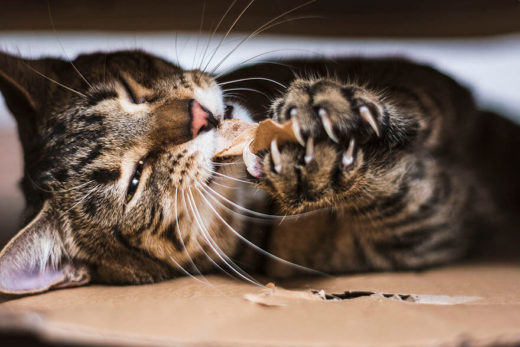
A tabby cat chewing on torn cardboard that it holds in its paws

Cats Need Some Dental Help to Keep Periodontal Disease at Bay

For the fearsome carnivore that is your cat, healthy teeth are incredibly important. But unless your cat is catching small game and consuming it whole–fur and some bone included–they’re not getting much useful dental care.

People who spend a lot of time with cats understand that cats don’t chew. As obligate carnivores, cats have evolved to have a collection of pointy teeth used for shredding their prey. When your cat eats small nuggets or other food forms, they basically swallows them whole with little chewing. So, cats who munch on kibble, canned and even raw food will need some dental help to keep periodontal disease at bay. While brushing remains the optimal way to keep your cat’s teeth healthy, dental additives and chews can also reduce the chance of periodontal disease.
Shop Our Cat Dental Products On Our Online Store


Why Cat Owners Should Care About Healthy Teeth

While we might care about a white, bright smile for cosmetic reasons, your cat is probably not worried about how they look in a selfie. But periodontal disease isn’t just about your cat’s teeth–it can also open the door to other diseases as the inflammation begins to affect the rest of your cat’s body.

Unchecked dental disease can affect essential internal organs, including the heart and kidneys. The inflammation that starts in your cat’s mouth can quickly lead to systemic problems that can make it more difficult for your cat to fight illnesses. Studies show that bad dental health is linked to an increased risk of certain cancers. Your cat also risks heart disease, lung disease, diabetes, gastrointestinal problems and kidney disease without proper dental care.

Periodontal disease also leads to bone loss over time, which can make your cat’s jaw even more delicate. And without regular dental care, your cat may lose teeth, develop gum disease or allow painful abscesses to form.

Once you spot tartar, you’ll need a veterinarian’s help to remove it. But plaque, which is the precursor to tartar, can be prevented or removed via toothbrushing or other methods.

My Cat Is Secretly Absorbing Their Teeth?!!

You probably don’t even notice what’s happening at first. But underneath the gum, your cat’s mouth may be busily reabsorbing some of their teeth! Tooth resorption is a common feline oral health abnormality, where the body starts absorbing the teeth along the root and underneath the gum. It’s not caused by bad oral health, but it does require treatment.

If you notice your cat is having trouble eating or drools excessively, it’s possible that your cat has this painful condition. Tooth resorption is something that requires your veterinarians help, even though the exact cause is unknown. Treatment often involves removing teeth that are causing your cat pain, so be prepared to discuss available options with your vet.


Three Options to Help Work Towards Feline Dental Health

Brushing isn’t the only way to maintain excellent feline dental health. Even if your cat’s teeth never touch a toothbrush, you have three wide categories of dental health preventatives to explore.

Pick an item out of at least two of three categories to use daily to help your cat’s mouth stay healthy.

Shop Our Cat Dental Solutions

Mechanical

Mechanical dental care works by physically removing plaque from teeth before it turns into tartar. Toothbrushes and toothpastes are the most common means of mechanical dental care but dental chews also fit into this category.

This type of dental care can be tricky depending on your individual cat. Some cats will tolerate brushing, while other cats love to chew. But if your cat doesn’t fall into either of those categories, you might want to examine options outside this category.

Shop Toothbrushes and Toothpaste for Cats


Enzymatic

Many toothpastes are formulated with enzymes. These enzymes either help break down food that bacteria eat or produce a hydrogen peroxide mixture (which is natural occurring in all mammals) that helps to create an environment in the mouth unsuitable for these bacteria. Without their food source and in an unfriendly environment, the bacteria that causes periodontal disease drops significantly. That reduces the amount of plaque, so your cat’s teeth won’t develop as much tartar.

Shop Our Enzymatic Solutions For Cat Dental Health


Systemic

Supplements for dental health attack plaque-causing bacteria throughout the body. Your cat drinks or eats the supplement as part of their overall diet, which makes it an easy dental care option.

When possible, look for supplements that are added into food and avoid dental health water additives unless your cat likes them. Many cats dislike water additives and may avoid drinking altogether.

One dental supplement that works for many cats is kelp. While there are a lot of dental supplements available, some cats don’t like the taste. Dried Icelandic sea kelp requires only a fraction of a teaspoon in your cat’s daily meal to work.

Shop Our Dental Health Supplements for Cats


For cats with a history of dental problems, you’ll probably want to look for an option in all three categories. Luckily, many products span several categories. If you can’t brush your cat’s teeth, for example, you can pick a dental chew with enzymatic properties. Then, if you found a dental supplement your cat liked, you will have effortlessly covered all three categories in your everyday routine.


Shop Now:

Shop All Of Our Dental Solutions In Our Online Store


Our Best Tips for Brushing Your Cat’s Teeth

Regular, daily brushing is one way to clean feline teeth. A toothbrush that’s appropriately sized to your cat’s mouth can clean the premolars and molars where most of the tartar and plaque collects. However, getting a toothbrush into your cat’s mouth so it can reach those back molars can be challenging. But even though it can be difficult, we still believe it’s an effective way to guard your cat’s good dental health.

For the best possible chance of acceptance, try to introduce the concept of tooth brushing to your cat slowly. To build the habit, work on tooth brush every day for a couple of minutes, and plan on full toothbrush acceptance to take a month.

To start, cover your finger with some gauze and place it into your cat’s mouth. Some people have reported success with using a little broth from a can of tuna to flavor the gauze. Once your cat is okay with you gently massaging her gums, you can try being more aggressive with the gauze to remove plaque.

You can then try using a finger brush in your cat’s mouth. Or, if your cat is very tolerant, you might want to start with the finger brush. Tuna broth can be a good substitute for toothpaste during this step.

When your cat learns to accept the brush, try acclimating them to the toothpaste next. Let them taste the toothpaste without the brush for a while. Be prepared for them to reject some toothpastes—it’s worth trying a few different flavors if your cat is particular about taste.

Then, once they accept both the finger brush and the toothpaste, you can try using them together. Brush long enough to scrub all the surfaces of all the teeth. Brushing every day is the gold standard for feline dental care, but even every other day yields significant dental health benefits.

How to Choose a Feline Toothpaste

Cats may have fewer taste buds than humans or dogs, but they’re still particular about toothpastes. Toothpastes for felines often rely on meat-based or other appealing flavors, which are more likely to appeal to your cat than something that makes their breath minty fresh. Finding a toothpaste with a flavor your cat likes is paramount, but there are other considerations.

Many toothpastes use different compounds to reduce the formation of plaque and subsequent tartar. Enzymatic toothpastes work by eliminating the food that bacteria feeds on, but there are other plaque-inhibiting options. Some toothpastes use an ingredient called tetrasodium pyrophosphate, which is a tartar control agent that removes calcium and magnesium from saliva. Without these minerals, it’s harder for them to be deposited onto teeth and create tartar.


Feline Appropriate Chews

While felines don’t have the instinct to chew like dogs, some cats can be persuaded to chew on certain objects that will remove plaque from their teeth. The occasional cat will chew almost anything, but they are unusual. For cats that seldom chew, you should be prepared to try multiple types of chews until you find one that your cat seeks out. Here are some things to try:

Jerky: Many cats will chew on thick jerky treats marketed towards dogs. When choosing a piece of jerky for dental health, look for jerky that comes in large pieces that will require your cat to tear off pieces before consuming it. Small jerky treats won’t provide any benefit; your cat is likely to swallow them whole.

Raw, meaty bones: Bones with actual meat on them can entice cats to chew. To find a bone that your cat will love, look for small bones that your cat can reasonably chew that have a significant amount of meat on them. Some possible options include chicken wings, necks and small poultry bones from quail and Cornish hens. Small whole fish, such as sardines, are also great for teeth health. It’s also a good idea to look for bones marketed to pets. While the bones at your local grocery store may be of high quality, they’re also more likely to contain salmonella than bones in the raw pet food supply.

Fish skins: Most cats love fish, so fish skins might be a good option for the particularly discerning feline that won’t accept other types of chews.

Dried hearts: Some cats love the texture and taste of dried chicken and pork hearts. These chewy treats require some chewing to break down into smaller pieces, which makes them an excellent choice for plaque removal.

Freeze-dried or dried bully sticks: Unusual cats who chew may need more of a challenge. That’s where bully sticks come in. These protein-packed treats appeal to some cats, who really must work to remove bits of the stick.

After choosing the chew, try holding it for your cat. Your feline might not want to grasp with their paws initially, but if you’re willing to hold it, they might chew the chew. And if they’re a highly social cat, they might just gnaw on the chew to spend time with you.

Older cats might need something slightly easier to chew. A quick 20-minute soak in warm water will help soften many of these items and make them easier for your cat to gnaw.


Does Diet Help Create Better Feline Oral Health?

Crunchy kibble may seem like it should reduce plaque, but traditional dry foods don’t actually help improve your cat’s oral health. Your cat’s mouth isn’t made for chewing, and your cat often swallows things whole without much crunching involved. Raw food is good at reducing visible plaque, but even raw food doesn’t eliminate the need for an oral health plan.

Your cat needs regular dental healthcare to keep periodontal disease at bay. Whether you feed wet food, kibble, raw or something else, your cat will need regular toothbrushing, dental supplements or other products to keep their mouth healthy.

A cardboard cat carrier

When to See Your Veterinarian About Your Cat’s Dental Health

Your veterinarian should check your cat’s mouth health during their yearly physical but be on the lookout for signs of dental problems. Facial swelling, chewing only on one side of their mouth, or any sign of dental pain is worth talking to your veterinarian.

Visible tartar or loose teeth will likely require your veterinarian’s help, too. Only a veterinary professional will be able to remove yellow concrete-like tartar from your cat’s teeth.

Finally, if you’re always struggling with your cat’s not-so-fresh-breath, consider talking to your veterinarian. Persistent bad breath is likely to be a symptom of poor dental health that may need a thorough veterinary cleaning to resolve. Luckily, after the cleaning is complete, your cat is likely to have neutral breath if you continue to help them maintain their good dental health.

Skip to header navigation
Mudbay Facebook Link Mudbay Instagram Link

About Our
Company
  • About Us
  • Frequently Asked Questions
  • Careers
Mud Bay Services
  • Local Delivery
  • Curbside Pickup
  • Muddy Support Team
Mud Bay Programs
  • Made with Mud Bay
Contact Us
  • General Inquiries
  • Media Inquiries

We’re not veterinarians. Mud Bay staff are well educated, and our writing is well-researched, but neither the advice of a Mud Bay staff member nor reading Mud Bay’s written materials can substitute for visiting a veterinarian. We offer carefully chosen, natural solutions, but we believe that veterinary conditions should be diagnosed and treated by professionals.

©2026 Mud Bay. All rights reserved. Legal & Privacy

Office Location: 500 Columbia St NW, Ste 202, Olympia, WA 98501 ph: 360.709.0074