
Mud Bay recommends a raw diet for dogs because it offers a wide variety of benefits to them. One of the biggest benefits is the amount of moisture that raw food can add to your dog’s diet. A frozen raw diet contains intercellular moisture locked into every bite, while freeze-dried and air-dried foods can easily be rehydrated on an as-needed basis.
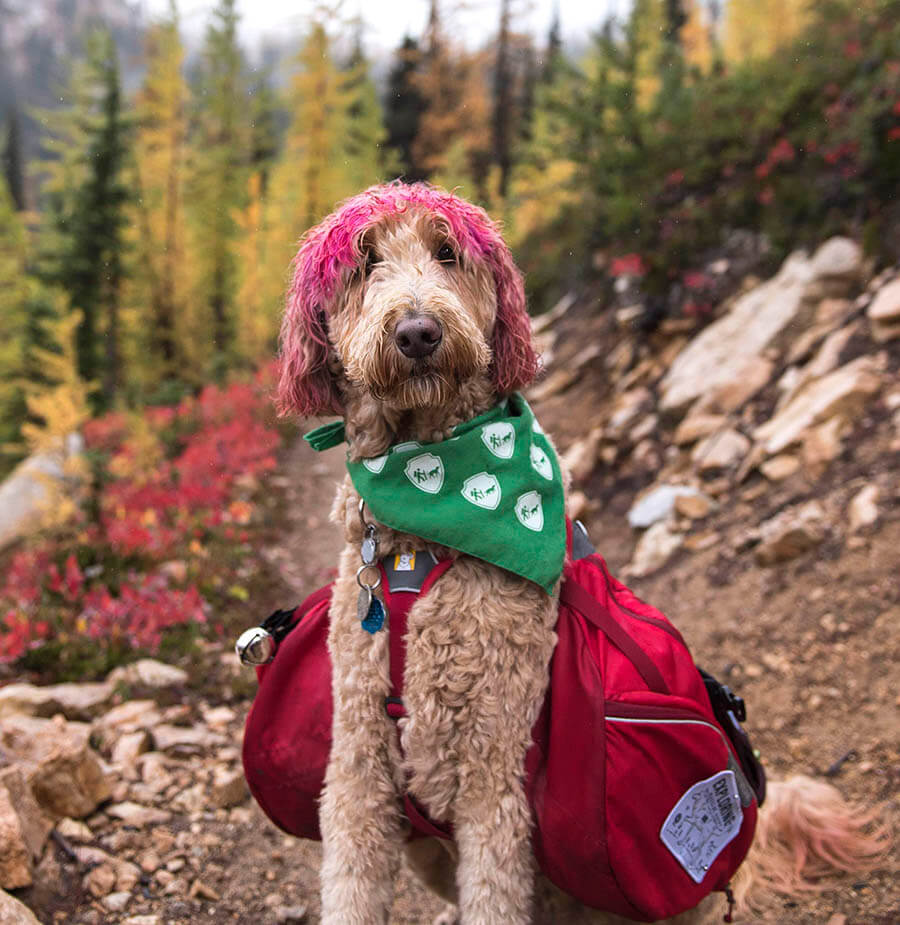
To find out more about raw diets and transitioning to raw foods, we talked to Allison Strange. Allison is currently one of our community outreach coordinators, but before that, she worked at the Seattle Humane Mudlet helping owners learn about the nutritional needs of their new animals. She’s also the proud owner of Sadie Starship, a six-year-old Goldendoodle who eats raw food.
AS: Any amount of raw food is going to be beneficial, but Mud Bay recommends 25 percent raw food combined with 75 percent of kibble as a good starting point. Even at that amount, you can see a difference in your dog’s coat and energy level. Plus, their poops are smaller and less stinky.
AS: I find that most people prefer to use air-dried or freeze-dried raw food because of the convenience. With these types of foods, there’s very little prep involved. You just mix the appropriate amount of raw food into your dog’s other food, and then add your preferred liquid to the dish. Wait fifteen minutes, and then you can serve it.
This type of raw food is also really similar in appearance to kibble, so it can be an easier transition for you. And once you hydrate the air-dried or freeze-dried raw food, it has a similar texture and appearance to canned food, which many dogs love. Just make sure that if you’re using a raw food that isn’t raw frozen, you’re also adding that moisture back into the food.
AS: I usually rehydrate with water to keep things simple. However, if my dog is super lucky, I’ll also use bone broth or goat’s milk. Actually, my dog’s absolute favorite things are goat’s milk or goat’s kefir, which can rehydrate raw food.
AS: First, just try to add 25 percent raw food to your dog’s meal and supplement with 75 percent kibble. The increase in price will be minimal, but there are significant health benefits.
But if you want a cheaper option, Sojos makes a really good air-dried food that is fairly economical but still really easy to feed your dog.
If price is your primary concern, Northwest Naturals makes frozen raw food in chubs and bar format. There’s a little more prep work involved, but you can buy the food in bulk and it lowers the overall price.
AS: A frozen raw diet for dogs is a little different because you’re handling raw meat, so it can be intimidating for some dog owners. It’s important to follow safe food handling practices for all raw food.
But to make it easy to feed frozen raw food, I like to pre-portion the food and put it into a glass, ceramic, or stainless steel container in the freezer. Then I keep a few of the measured portions in my fridge to thaw until I’m ready to feed her. The raw food should thaw overnight in the fridge and be ready to eat the next morning.
AS: Dogs that are kibble-fed benefit from a slower transition period. You want to take at least two weeks to make the transition.
I start with about 10 percent air-dried or freeze-dried food and mix it into the kibble. Then, when you’ve added the amount of raw food you’d like to feed your dog, add a liquid to hydrate the food. The entire process should take at least 14 days.
If you want to feed your dog frozen raw, it might be easier to start with the raw food as a topper on your dog’s existing kibble. Just remember to keep the total calories per meal the same—you don’t want to accidentally overfeed your dog. If you want to feed your dog 100 percent frozen raw, it should take you at least 14 days to reach that goal.
However, if your dog is known to have a sensitive stomach, I recommend adding Optagest or another digestive enzyme to your dog’s meal. You can also double the transition period to 28 days.
Keep in mind that you should watch for loose stool, excess gas, vomiting or diarrhea. If you see any of those symptoms, stop feeding raw and give your dog’s system a chance to recover. You may want to fast them for 24 hours, and then reintroduce food in the form of a bland diet. Then, start the transition from where you stopped and try again.
AS: My biggest tip is to make it easy for everyone involved. There are a lot of great raw products that you can mix directly into your dog’s kibble, and then add additional liquid if necessary. I’ve also noticed that some people prefer to feed their dog kibble in the morning and raw food at night.
I feel whatever works for you will work for your dog if you give your pet enough time to adjust. And adding bone broth, raw food, goat’s milk, kefir or another moisture-rich food to your dog’s meal is a great boost to your dog’s health.
Allison Strange has worked at Mud Bay for nearly four years. You might recognize her from the Mercer Island Mud Bay or Seattle Humane’s Mudlet. Now she’s a community outreach coordinator who you’ll see at numerous events throughout Puget Sound. When she’s not at a Mud Bay, you might spot her hiking with her pink-haired Goldendoodle, Sadie Starship.
It’s never a bad time to chill. 🧘♀️ 🐾
🍨
Swell`s My Chill Time Premium Dog Gelato is made with functional ingredients like chamomile and passion flower tea, which help your pup stay cool, calm, and collected when summer activities makes thier day-to-day a little more stressful. Plus, it includes blackberries, 🥥 coconut milk, ginger, beets, and 🍯 🐝 honey, which are great for digestion and antioxidant support.
🐕
Swell Premium Dog Gelato is not only a tasty treat on a hot summer day, but it also helps keep your pup living their best life and staying CHILL. Shop My Chill Time from Swell in-store or online at Mud Bay this summer. 🌞
#mudbay #swelldoggelato #swell #dogs #chill

Adventure-ready and made for the water, the Ruffwear Float Coat helps keep your dog comfortable during every swim.
🌊 🛶 🐕 ☀️
The Float Coat offers a secure, telescoping neck closure that adjusts to fit a variety of dog sizes, while the lightweight foam panels support natural movement and buoyancy in the water, keeping them comfortable and safe.
🌊 🛶 🐕 ☀️
Plus, it offers a super handy, low-profile handle that makes it easy to lift your pup out of the water, and reflective accents that add extra visibility for long days at the lake, beach, or river.
🐾 🛍️
Bring your pup in-store or shop with us online for the Ruffwear Float coat today!
#mudbay #summer #adventures #ruffwear #doglife
🌞 🎆 🎉 Summer brings celebrations, late nights, travel and events that can leave your pets feeling uneasy.
🐈 🐕
Mud Bay is here to help, offering products that bring calm and comfort to your cat or dog when things get noisy.
🐈 🐕
We carry calming collars, tinctures, treats, and pheromones to help your pets handle everything summer brings—Shop Mud Bay in-store or online to find the right calmatives for your pets.
#mudbay #summer #keepcalm #healthypets #calming
Fluff & Tuff`s #IGIVEAFLUFF is Coming Soon!
🐾
Starting June 8th, National Best Friends Day, our friends at Fluff & Tuff are once again kicking off #IGiveAFluff to help put toys in the paws of shelter and rescue dogs who need them most.
🐾
And we want you to be a part of it, and it couldn`t be easier to participate!
Here`s how it works:
📸 Snap a photo of your dog with their favorite Fluff & Tuff toy.
📱 Share it on social media using #IGiveAFluff.
🐾 Fluff & Tuff donates a toy to a shelter or rescue dog.
🐾
Since 2015, with the support of pet parents like you and the generosity of Fluff & Tuff, over 22,000 toys have been donated to shelters and rescue dogs. Want to participate, but you need a Fluff & Tuff toy? Take a tip from Frank and stop by your local Mud Bay or visit us online. Click the link in our bio to learn more about #IGIVEAFLUFF
Canagan canned cat food is grain-free and made with your cat in mind, using high-quality protein from chicken, salmon, tuna, and more.
😻
It’s inspired by what cats are naturally built to eat, with a focus on animal protein and no artificial flavors, colors, or preservatives.
🐈
It’s also an easy way to add moisture to your cat’s routine—something many cats don’t get enough of—which can help support your feline friend with kidney and urinary-tract health.
🐈
🛍️ Shop Canagan Complete Cat Food in-store or online at Mud Bay.
Summer is coming, so be like Goose 🐕 and stay cool 😎 ❄️ on every outing with the Swamp Cooler Harness from Ruffwear.
🧊
Whether she’s out on a trail or enjoying a long walk or run, this harness is built for warm-weather adventures, offering cooling comfort and secure control in one breathable design.
🌞
Shop in-store or online at Mud Bay.
#mudbay #adventures #pnw #dog #summeriscoming
Mud Bay Memorial Day Hours ⏰
🐈 🐕
Today, Monday, May 25, all Mud Bay locations will be open from 10 am to 6 pm.
🐈 🐕
Delivery orders placed after 2 pm on Sunday will arrive on Tuesday. Store pickup and Instacart will still be available. 🐈 🐕 🚚
#mudbay #holidayhours #healthypets #mudbaydelivery #pets
🐾🌷The Ruffwear Front Range Flex Collection
🐕
Meet Harley, out in the tulip fields and ready for her next outing in the Front Range Flex Harness, Collar, and Leash.
🌷
Whether it’s a walk through the neighborhood or your next PNW adventure, this collection is designed for everyday use and changing conditions:
🐾
Lightweight and built to handle wet conditions
Easy to clean, just hand-wash and air-dry
Made with durable materials for every outing
🌷
Harley picked her look… now it’s your turn.
🐾
The Ruffwear Front Range Flex Collection is now available at Mud Bay. Shop in-store or online today!
#mudbay #ruffwear #adventure #dogwalk #pnwdogs
This cheese-flavored 🧀 💊 pill wrap helps make giving medicine easier for both dogs and cats. 🐕 🐈 Simply tear, wrap, and serve. It’s quick and mess-free.
🐾
The soft texture can be torn to fit any pill, and the cheese flavor makes each dose easier to give. Now with pumpkin, and always free from grain, gluten, and soy.
🐾
Stashio’s is a woman-owned company from Minnesota that creates simple solutions for daily pet care.
🐾
You can find Stashio’s wrap-ups at Mud Bay, both in-store and online.
#mudbay #stashios #wrapup #healthypets #pnwpets
Let your dog relax 💆 and unwind with a Puptail.
🌞
After a walk, run, hike, or just because, this brunch-inspired Puptail is a fun way to help your pup slow down and take it easy. It’s easy to make and flexible, so you can mix and match to make it your own.
🐾
Ingredients
- 3 tbsp Green Juju Golden Blend
- 1 tbsp blueberries
- 1 tbsp banana slices
- 1/2 cup Primal Raw Goat’s Milk Cranberry Blast
- Swell Dog Gelato Banana and Peanut Butter (for topping)
- Wagster Banana and Toasted Coconut Biscuits
- Green Juju Freeze Dried Vitality Blend
- Furvor Concentrated Beef Bone Broth (for ice cubes)
🐾
Optional Extras 🐕 🐶
Blueberry and bone broth ice cubes
Wag and Bright Supply Co. Spirulina and Beef Collagen dog chew
🌞
Directions
1. Add Green Juju Golden Blend as your base
2. Layer in blueberries and banana slices
3. Pour in goat’s milk between layers
4. Repeat layers as desired, then freeze or serve as is
5. Top with gelato, biscuits, and freeze-dried blend
6. Add ice cubes and extras for a cool finish
#mudbay #treatyoself #pup #summeriscoming #puptail
Furvor bone broth is made with 100% human-grade ingredients and is up to 30 times more concentrated than regular broths. It provides protein, collagen, amino acids, and important nutrients to help your dog’s gut, joints, skin, coat, and overall health.
🐕
The 20 oz bottle provides more than 20 servings, making it an easy way to add beneficial nutrition to your dog’s daily routine at home.
🐕
If you’re out and about, Furvor’s single-serve pouches will help keep your dog hydrated, with a pep in their step wherever you go. They’re great for summer, hikes, walks, or days by the water.
🐕
Just tear open, squeeze, and serve. You can mix it with water, pour it over kibble, or give it on its own. You can buy them one at a time or in a pack of six.
🐕
Shop Furvor Bone Broth in-store or online today! 🛍️ 🐾
#mudbay #furvor #healthypets #pnwpets #bonebroth
Capstar Oral Flea & Tick Treatment
🐾When fleas show up, it helps to act quickly. Capstar is an easy-to-use oral treatment that starts working in about 30 minutes and can kill most fleas within the first few hours. It’s a simple way to bring fast relief and can be used alongside your dog’s regular flea and tick routine.
🐕
Vetality Flea & Tick Monthly Topical Treatment
🐾 For ongoing protection, Vetality Avantect offers vet-quality coverage at a great value.
🐾
These broad-spectrum topicals kill and repel fleas, flea eggs, ticks, and mosquitoes, while also targeting all stages of the flea life cycle. It also helps repel biting flies and kill lice. Available in four weight ranges and a four-month supply for continued protection.
🐕
🛍️ Shop in-store or online today.
#mudbay #fleaandtickseason #healthypets #dogs #fleafree


